
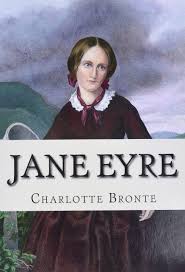
Author
On April 21, 1816, Charlotte Bront was born in Thornton, England. She was one of six children and spent her childhood in the town of Haworth, which is close by. In this town, her father, the Rev. Patrick Bront, was appointed the curate of the local church in 1820. The following year, her mother passed away from cancer. The Clergy Daughters’ School in Lancashire, where her two older sisters passed away from tuberculosis, was where Charlotte and three of her four sisters were placed in 1824. Charlotte and her sister Emily went back to Haworth shortly after that.
Patrick Bront took over the education of his four surviving children and gave them access to his well-stocked library when he returned to Haworth. The poetry and stories that Charlotte, Emily, their sister Anne, and their brother Branwell wrote at this time were published in a family magazine. Charlotte was most prolific as a poet between the years of 1829 and 1831 when she was a child. Her work shows how interested she was becoming in literary history and how she wanted to be recognised as a canonical poet.
Charlotte began her studies at Roe Head School in 1831 and later worked as a governess there and in other places. Before going back to Haworth in 1844, she also spent some time studying and teaching in Brussels. Under the aliases Currer, Ellis, and Acton Bell, the Bront sisters self-published a book of their poems in 1846. However, Charlotte did not receive literary acclaim until Jane Eyre, which was also published the following year under the pseudonym Currer Bell, was released. Jane Eyre, known for its female first-person narrative, became popular right away. After that, Charlotte published three more books, including Villette and The Professor, which was written after her death.
Following her own creative success, Emily’s with Wuthering Heights, and Anne’s with Agnes Grey, rumours regarding the identity of the Bells grew. In 1848, Charlotte disclosed her identity as Currer Bell and started to mingle with other writers in London. Branwell passed away in September 1848, but within a year, Emily and Anne also passed away from disease. Following this, Charlotte spent the majority of her time in Haworth with her ailing father. In 1854, she married Arthur Bell Nicholls, the parson who had assumed control of the house in 1845. After a protracted illness, Charlotte passed away while still pregnant on March 31, 1855.
Summary
Jane’s life is chronicled throughout the book from childhood to adulthood.Jane is seen reading by herself in the breakfast room at the beginning of the book, attempting to escape the Reed family and find some solitude. This, however, is short-lived because Jane’s tormentor Master John Reed shows up. He calls Jane a “rat,” implies that she is destitute, unappreciative, and a beggar since she is dependent on his mother’s fortune. An altercation starts when Jane strikes back. Jane is abducted and put in the “Red Room” after Mrs. Reed instructs her staff to break up the brawl. The Red Room, one of the house’s “haunted” rooms, is where Jane thinks she first encountered her uncle’s ghost.She slams the door repeatedly in an attempt to be allowed outside because she is scared of this, but no one answers. Jane has a fever that almost kills her.Mrs. Reed sends Jane to Lowood School, which is administered by the vile Mr. Brocklehurst, because she no longer wants her in the family. She informs him that Jane has to be disciplined, and Brocklehurst enjoys any chance to do so in front of Jane’s peers. There isn’t enough food or water for the girls, and illnesses are commonplace at the school. Jane makes her first friend and learns the significance of love and friendship for the first time in her life. Tragically, Jane’s closest friend Helen Burns passes away from consumption, and Jane stays at her side the entire time.Soon after, some compassionate and nice men take over the school, which improves the situation. Later, Jane works there as a teacher.
Jane chooses to quit Lowood School and submits an application to become a governess. She accepts the job and relocates to Thornfield Hall, where she takes care of and educates lively French youngster Adele. After a few months, Jane meets Rochester, who also happens to be her supervisor and the estate’s owner. Although he is unpleasant and distant, she thinks he is clever and brilliant. She starts to fantasise about how her life might be with Edward Rochester as she starts to fall in love with him. At Thornfield, a fire starts in the middle of the night, almost killing Rochester as he slept. By sounding the alarm and putting out the fire, Jane protects Rochester. As she thanks Jane, Rochester departs, leaving her to wonder who set the fire. The following morning, Rochester says his alcoholic servant Grace Poole was responsible. Jane, however, is unconvinced by Rochester’s explanation and is certain Grace Poole did not ignite the fire because Rochester hasn’t ruled her out.The housekeeper at Thornfield, Mrs. Fairfax, delivers a guest announcement for Rochester. Since they haven’t had visitors in years, the family is both incredibly excited and nervous. To get ready for the party’s arrival, preparations are made. A group of visitors shows up, among them the stunning Blanche Ingram, to whom Rochester is rumoured to be engaged. Jane, who assumes Rochester loves Blanche, is devastated by this information and eagerly awaits the marriage proposal.
Rochester confesses his love for Jane and asks her to marry him rather than making a proposal to Blanche. Jane is stunned and first doesn’t trust him, but she gradually does. Rochester insists that he wants to get married fast and secretly as they get ready for it. On the day of their wedding, Mr. Mason shows up at the church and announces that Rochester is unable to wed because he is already wed to Bertha Mason, his sister. By escorting Jane to visit his violent and mentally disturbed wife in the attic, Rochester verifies the tale. Rochester declares that even though he is married, he still loves Jane and that they might still coexist.Jane locks herself in her room so she is alone with her thoughts and can make decisions. Jane concludes that because Rochester is already married, she cannot be with him. She chooses to flee in accordance with her moral standards, which results in her becoming homeless. She travels away from Thornfield Hall and forages for food in rural areas in the hopes that Rochester will never discover her. The Rivers family takes her in when she is starving, delirious, and on the verge of passing out and cares for her until she recovers. Jane joins the hamlet as a schoolmistress once she recovers.
The Rivers family’s brother, St. John Rivers, arrives at Jane’s school to inform her that her uncle has passed away and left her his fortune and estate. John also explains that they are cousins because Jane’s uncle is also his. Jane divides the inheritance among her family members as she is overwhelmed and grateful to have them. St. John makes the decision to start a mission in India. Jane accepts when he invites her to come along, but St. John advises that they get married before setting out on their voyage. Jane agrees grudgingly, but when she hears Rochester shouting her name in the middle of the night, she realises she cannot wed a man she doesn’t adore.When Jane recognises Rochester’s voice, she goes back to Thornfield. When she gets there, she sees that it has burned down. Jane fears the worst, that everyone in the home—including Rochester—has passed away. She quickly learns the truth: Bertha set the Hall on fire, and Rochester lost his hand and was blind trying to save her. To view Rochester, Jane travels to Ferndean. He thinks he is hearing Jane’s voice in his head because he has lost his sight. She being there overwhelms him, and he sobs and tells her he loves her. The novel ends with Jane and Rochester getting married and having kids. In order to see his firstborn child, Edward is able to regain vision in one eye.
Leave a Reply