
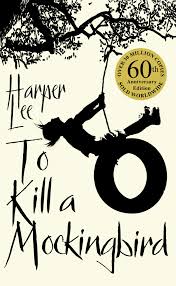
Author
Harper Lee, whose debut book “To Kill a Mockingbird” about racial injustice in a small Alabama town sold more than 40 million copies and became one of the most cherished and frequently taught pieces of fiction ever written by an American, passed away on Friday in Monroeville, Alabama, where she resided. She was 89.Amasa Coleman Lee, Harper Lee’s father, was a lawyer who, by all accounts, matched the protagonist of the book in terms of good citizenship and warmth. Part of the inspiration for the plot of To Kill a Mockingbird came from his youthful, unsuccessful defence of two African American men who were found guilty of murder. Lee attended the University of Alabama to study law.But she didn’t have a degree before she departed for New York City. She held a position as an airline reservationist in New York, but soon obtained financial support from friends, enabling her to pursue writing full-time. She turned a collection of short pieces into To Kill a Mockingbird with the aid of an editor.After “To Kill a Mockingbird” was published in 1960 and went on to win the Pulitzer Prize for fiction the following year, Ms. Lee felt her new status as a literary celebrity to be stifling and never learned to embrace it.
Summary
Six-year-old Scout Finch resides in the little town of Maycomb, Alabama, in the midst of the Great Depression, together with her older brother, Jem, and her widowed father, Atticus. Atticus works hard hours and earns enough as a lawyer to keep the family comfortably out of poverty. In order to raise the children, he relies on Calpurnia, the family’s black cook. On the contrary side, Scout thinks Calpurnia is dictatorial and prioritizes Jem above her.The majority of Scout and Jem’s time is spent acting out and constructing fantasies. One summer, Dill, a youngster, stays with Miss Rachel, the Finches’ next-door neighbour, to spend the season with his aunt. The three kids become close friends and, thanks to Dill’s vivid imagination, quickly develop an obsession with a nearby home called Radley Place. The house is owned by a man by the name of Nathan Radley, but it’s his misanthropic brother, Arthur Radley (who the kids call Boo), who intrigues and terrifies them. According to rumours, Arthur Radley once stabbed his father, Mr. Radley, with scissors, and is now locked up in the house. The neighbourhood kids believe he is absurdly tall, drools, and devours squirrels and cats.Scout is certain she senses someone watching them from inside from behind a curtain while Jem runs up and touches the Radley house on a dare.
The summer is over, and Dill goes back to Mississippi. Scout is excited to start school, but she despises it. Miss Caroline, her instructor, chastises her for being able to read on the first day and prevents her from writing in cursive. When Scout is unhappy after school, Atticus tells her to consider how Miss Caroline must have felt because she had no idea how to handle the peculiarities of the Maycomb kids, just as Scout had no idea how to handle her strange teacher.To perceive things from others’ perspectives, he advises her to put herself in their position. When Scout and Jem occasionally discover valuables jammed into a tree knothole next to the Radleys’ fence, it becomes one of the pleasures of the academic year. Scout and Jem disregard the claim that everything on the Radley property is poison when they discover several sticks of gum.Dill returns as summertime approaches. As he, Scout, and Jem gather confidence, they sneak onto the Radley property one night to look through the window, but Nathan Radley spots them and assumes they are robbers. Jem’s clothes become caught in the Radley fence as they flee, though. To the astonishment and annoyance of the adults, he leaves them behind, and in an effort to hide their tracks, the kids gather at Nathan Radley’s gate with the rest of the neighbourhood to claim that Dill won Jem’s pants in a game of strip poker.
Later that evening, when Jem returns to Radleys’ fence to retrieve the pants, he discovers them repaired and folded. Until Nathan Radley cements the knothole shut, saying the tree is dying, Scout and Jem continue to find gifts there. Particularly after Atticus remarks that the tree doesn’t appear to be sick, Jem is deeply saddened. A few months later, in the middle of winter, as Scout and Finch watch the Finch’s next-door neighbour Miss Maudie Atkinson’s home burn, someone Scout can’t see wraps a blanket around her shoulders. Jem understands Boo must have been responsible. Atticus tries to laugh, but Scout is horrified.In that year, the court appoints Atticus to represent Tom Robinson, a black man, who is charged with raping Mayella Ewell, the daughter of Bob Ewell, a destitute white man with a history of violence. Maycomb sees an uptick in racial animosity. Schoolmates, neighbours, town residents, and even some family members start abusing Scout and Jem. Scout has a lot of difficulty with this during Christmas, and Atticus begs her to not hit others when they insult her over it. In order to get Scout into trouble with her adored Uncle Jack, Francis, a boring family member who is a year older, lures her into a fight while they are at Finch’s Landing.Later, at home, Scout explains to Uncle Jack what went wrong: he never sought her perspective and punished her in accordance with Francis’s false claim. She also begs him to keep the entire incident hidden from Atticus. Though Atticus declines to instruct Scout and Jem in shooting, Scout and Jem do get air rifles for Christmas, which is a plus. He just offers the counsel that killing a mockingbird is wrong.
Later that winter, as Scout and Jem use their brand-new air rifles to go rabbit hunting, they see Tim Johnson, a beloved Maycomb dog, acting suspiciously.Calpurnia determines that the dog is infectious, notifies the neighbours, and makes calls to Atticus and Heck Tate, the sheriff. The kids are shocked by Mr. Tate’s decision to have Atticus shoot the dog instead of doing it himself; they had no clue Atticus was even capable of using a firearm, but Miss Maudie claims he was once the county’s top marksman.In the spring, Scout and Jem start travelling further down the road to meet Atticus after work, passing Mrs. Dubose’s horrifying residence in the process. Jem can put up with her harassment for a time, but one day she starts calling him names and insulting him for standing up for Tom Robinson. In retaliation, Jem removes the tops of her cherished camellia bushes. Mrs. Dubose that Jem read to her every day after school for a month as restitution, and Atticus believes he must fulfil this request. Mrs. Dubose terrifies both Jem and Scout since she has fits of some kind and is utterly evil the entire time.
A month after Jem finishes, Mrs. Dubose passes away because Atticus made him read for an additional week. According to Atticus, Mrs. Dubose was a morphine addict who utilised Jem’s daily reading to kick her habit before passing away because she wanted to pass away free. Atticus acknowledges that the reason he made Jem read was so that Jem would understand that having courage doesn’t mean carrying a gun; rather, it means taking action even when you know you won’t succeed.One Sunday while Atticus is away, Calpurnia brings the kids to her black church, where they are, for the most part, welcomed with open arms. Particularly Scout is astonished to learn that Calpurnia has a double life, speaking one way in the Finch household and another among her black peers. Atticus’ sister, Aunt Alexandra, will be waiting for them when they get home to offer Scout with a “feminine influence” for “a while,” which in Maycomb may mean any amount of time.
When Aunt Alexandra prevents Scout from visiting Calpurnia’s house, Scout is doubtful and takes great anger. Compared to Atticus, Aunt Alexandra generally holds more traditional societal beliefs.She tries to convince the kids that the Finches are a “Fine Family” since they have lived on the same piece of property for many generations and treats Calpurnia more like a servant than a member of the family. Jem points out that the Ewell family is also made up of “Fine Folks” by this line of reasoning. Scout finds Dill hiding under Calpurnia’s bed on the day that Aunt Alexandra forbids him from going there. Dill had fled his mother and her new husband. Even if Dill’s mother and Miss Rachel allow Dill to stay in Maycomb, Jem breaks their pact by alerting Atticus.
Dill acknowledges that he was lonely that evening and surmises that Boo Radley must also be alone; nonetheless, Boo hasn’t fled perhaps because he has nowhere to go.Scout, Jem, and Dill see tensions in Maycomb escalating the weekend before Tom Robinson’s trial. In Scout’s experience, large groups of men only assemble on the Finches’ lawn around funerals or when individuals want to talk politics. A throng surrounds the jail where Tom is being detained the day before his trial. Atticus predicted a mob attack on Tom, so Scout, Jem, and Dill snuck out of the home to find out where he went and meet him in the courthouse. When Scout finds herself in the midst of a group of males she doesn’t know, she is unaware of what is happening and feels terrified and uneasy, especially when she notices that Atticus is also uneasy.She spots Mr. Cunningham in the crowd and addresses him regarding his son Walter, a Scout classmate. Embarrassed, the man scatters the crowd.
The following morning, this incident is transformed into an exaggerated tale of bravery, much to Aunt Alexandra’s chagrin and Dill’s delight.Atticus makes a compelling case for Tom during the trial, demonstrating that both Mayella and Mr. Ewell are telling the truth because Tom is unable to use his left arm, making it impossible for him to have choked and beat a woman, and because Mayella’s injuries show that the person who beat her was left-handed. Instead, Mr. Ewell, who uses his left hand, is said to have beat Mayella when he saw her caressing Tom. Tom knew he had no choice but to flee, even though it made him appear guilty. The black people are required to sit on the balcony during the trial, so Scout, Jem, and Dill sneak in and observe the proceedings from there. Dill must leave while Tom is being questioned by Mr. Gilmer, the prosecuting attorney.He is furious with Mr. Gilmer for his racial remarks to Tom. They run upon Mr. Raymond, a white man who has made the decision to live with black people, outside. He observes that adults learn to disregard their innate sense of right and wrong, whereas Dill can only have this kind of reaction because he is a child.
Despite the all-white jury finding Tom guilty of rape, Jem is confident that Atticus will prevail in the case. The verdict particularly hurts Jem, and when Tom attempts to flee from prison but is shot and killed, he loses even more faith in the legal system.Despite the fact that Robinson was found guilty, Ewell is enraged that Atticus made him look foolish in court. He bothers Tom’s window, Helen Robinson, and even makes an attempt to break into Judge Taylor’s home. However, Atticus is unconcerned since he thinks Mr. Ewell spit in his face the week following the trial and that was the end of it. However, one night after a Halloween pageant, Mr. Ewell confronts Jem and Scout as they are walking alone home. Scout is unable to see much of what is happening, but she hears Jem’s arm shatter just before assistance arrives.
Mr. Ewell is stabbed to death during the altercation. Once inside the house, Scout realises the man who saved Jem and Scout is Boo Radley. He then carries Jem home.Scout tells Atticus that punishing Boo would be like killing a mockingbird, so Mr. Tate decides to keep Boo’s role in Mr. Ewell’s passing a secret. Scout walks Boo home after saying goodbye to Jem, who is comatose. Scout observes the world from Boo’s perspective as she stands on the Radley porch and thinks back on her previous summers’ adventures. She starts to realise that Boo was really their neighbour and that Scout, Jem, and Dill were his children. After arriving at her house, Scout nods off while Atticus reads to her by Jem’s bed.
Leave a Reply